Buy futurefoundation.eu ?
We are moving the project
futurefoundation.eu .
Are you interested in purchasing the domain
futurefoundation.eu ?
domain@kv-gmbh.de · 0541-91531010
Buy futurefoundation.eu ?
How can I progress with cosine, tangent, and sine?
To progress with cosine, tangent, and sine, it is important to first understand the definitions and properties of these trigonometric functions. Practice using these functions in various mathematical problems and applications to build familiarity and confidence. Additionally, learning about the relationships between these functions, such as the Pythagorean identities, can help deepen your understanding. Finally, solving trigonometric equations and working on more complex problems involving these functions will further enhance your skills and proficiency with cosine, tangent, and sine. **
Is a turning tangent just a tangent?
No, a turning tangent is not just a tangent. A turning tangent is a line that touches a curve at a single point and has the same direction as the curve at that point. This is different from a regular tangent, which only touches the curve at a single point but does not necessarily have the same direction as the curve at that point. Therefore, a turning tangent is a specific type of tangent that has an additional condition of having the same direction as the curve at the point of contact. **

Similar search terms for Tangent
Top-Angebote
Products related to Tangent:
-
Inspired Finds Growth Mindset Poster Therapy Office Wall Art Social Worker Decor Print positive Progress Rays 19.69x29.53 InCreate a space that inspires growth, reflection, and positivity with this meaningful growth mindset poster designed for professionals who care deeply about impact. Whether you're a counselor, therapist, or educator, this piece adds purpose to your...60,99 $*Shipping: 0,00 $Secure redirect to the provider
-
Felt Right Mustard Tangent Max Sound Dampening Pinnable TilesEach Felt Right tile is made from high-density, engineered PET felt that has a warm, wool-like appearance but is also very durable and wear-resistant! Each of our ⅜” Felt Right tiles act as a sound barrier on your walls. The fibrous nature of the...809,82 $*Shipping: 0,00 $Secure redirect to the provider
-
Felt Right Wisteria Tangent Max Sound Dampening Pinnable TilesEach Felt Right tile is made from high-density, engineered PET felt that has a warm, wool-like appearance but is also very durable and wear-resistant! Each of our ⅜” Felt Right tiles act as a sound barrier on your walls. The fibrous nature of the...1574,65 $*Shipping: 0,00 $Secure redirect to the provider
-
Felt Right Sage Tangent Max Sound Dampening Pinnable TilesEach Felt Right tile is made from high-density, engineered PET felt that has a warm, wool-like appearance but is also very durable and wear-resistant! Each of our ⅜” Felt Right tiles act as a sound barrier on your walls. The fibrous nature of the...809,82 $*Shipping: 0,00 $Secure redirect to the provider



-
What is the tangent of 1 or the tangent?
The tangent of 1 is approximately 1.5574. The tangent function is defined as the ratio of the length of the side opposite an acute angle in a right triangle to the length of the side adjacent to the angle. In this case, when the angle is 1 radian, the tangent is approximately 1.5574. **
-
What are tangent quadrilaterals?
Tangent quadrilaterals are quadrilaterals where each side is tangent to a circle. This means that the sides of the quadrilateral are all tangent to the same circle, creating a unique geometric relationship. Tangent quadrilaterals have special properties, such as the sum of opposite angles being equal to 180 degrees, and the sum of the lengths of opposite sides being equal. These properties make tangent quadrilaterals important in geometry and can be used to solve various problems involving circles and quadrilaterals. **
-
When is tangent used?
Tangent is used in trigonometry to find the ratio of the length of the side opposite an angle to the length of the side adjacent to that angle in a right triangle. It is also used to calculate the slope of a line in geometry. Tangent is commonly used in physics and engineering to analyze forces and motion in various systems. Additionally, tangent is used in calculus to find the derivative of trigonometric functions. **
-
What is a horizontal tangent?
A horizontal tangent is a line that is parallel to the x-axis and touches a curve at a single point without crossing it. This point of contact is where the slope of the curve is zero, resulting in a horizontal line. Horizontal tangents are often found at local maximum or minimum points on a curve, where the slope changes from positive to negative or vice versa. **


What is a sub-tangent?
A sub-tangent is a line that is drawn perpendicular to the tangent of a curve at a specific point. It intersects the x-axis at a point that is closer to the curve than the point of tangency. The sub-tangent is used to find the approximate value of the function at that point by measuring the distance between the curve and the x-axis along the sub-tangent line. **
What is the tangent problem?
The tangent problem refers to the issue of a tangent line being drawn to a curve at a specific point. The problem arises when the curve has a sharp corner or cusp at that point, making it difficult to define a unique tangent line. In such cases, the tangent line may not provide a clear indication of the curve's behavior at that point, leading to challenges in analyzing the curve's properties or making predictions based on the tangent line. This problem is often encountered in calculus and geometry when studying functions with discontinuities or sharp changes in direction. **
Top-Angebote
Products related to Tangent:
-
Felt Right Tangent Nickel Sound Dampening Pinnable TilesEach Felt Right tile is made from high-density, engineered PET felt that has a warm, wool-like appearance but is also very durable and wear-resistant! Each of our ⅜” Felt Right tiles act as a sound barrier on your walls. The fibrous nature of the...539,88 $*Shipping: 0,00 $Secure redirect to the provider
-
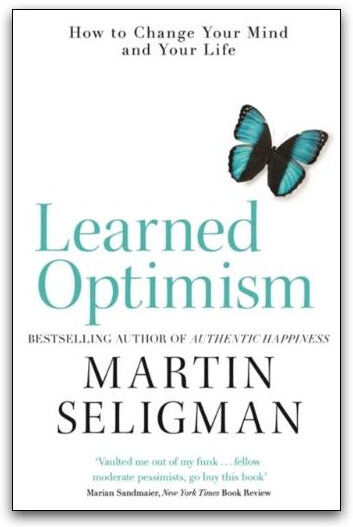
Nicholas Brealey Publishing Learned Optimism by Martin E. P. Seligman Positive Psychology, Resilience & Personal GrowthDiscover the life-changing power of positive thinking with Learned Optimism by renowned psychologist and positive psychology pioneer Martin E. P. Seligman. In this influential book, Seligman explains how optimism is not simply an inborn trait—it can be learned. Drawing on decades of psychological research, he introduces practical techniques to help readers recognize negative thought patterns, develop a more constructive outlook, and build resilience in the face of life's challenges. Whether you're looking to improve your mental wellbeing, boost confidence, manage setbacks, or achieve personal and professional success, Learned Optimism provides evidence-based strategies that can help you cultivate a healthier, more positive mindset. Why Readers Love This Book: Written by the founder of positive psychology Research-based techniques for building optimism and resilience Practical exercises to overcome negative thinking Helps improve confidence, wellbeing, and emotional strength Ideal for readers interested in psychology, self-improvement, and mental wellness A modern classic in psychology, Learned Optimism offers practical tools to help you develop a more resilient mindset and lead a happier, more fulfilling life.5,99 £*Shipping: 2,99 £Secure redirect to the provider
-
Inspired Finds Growth Mindset Poster Therapy Office Wall Art Social Worker Decor Print positive Progress Rays 19.69x29.53 InCreate a space that inspires growth, reflection, and positivity with this meaningful growth mindset poster designed for professionals who care deeply about impact. Whether you're a counselor, therapist, or educator, this piece adds purpose to your...60,99 $*Shipping: 0,00 $Secure redirect to the provider
-
Felt Right Mustard Tangent Max Sound Dampening Pinnable TilesEach Felt Right tile is made from high-density, engineered PET felt that has a warm, wool-like appearance but is also very durable and wear-resistant! Each of our ⅜” Felt Right tiles act as a sound barrier on your walls. The fibrous nature of the...809,82 $*Shipping: 0,00 $Secure redirect to the provider
-
How can I progress with cosine, tangent, and sine?
To progress with cosine, tangent, and sine, it is important to first understand the definitions and properties of these trigonometric functions. Practice using these functions in various mathematical problems and applications to build familiarity and confidence. Additionally, learning about the relationships between these functions, such as the Pythagorean identities, can help deepen your understanding. Finally, solving trigonometric equations and working on more complex problems involving these functions will further enhance your skills and proficiency with cosine, tangent, and sine. **
-
Is a turning tangent just a tangent?
No, a turning tangent is not just a tangent. A turning tangent is a line that touches a curve at a single point and has the same direction as the curve at that point. This is different from a regular tangent, which only touches the curve at a single point but does not necessarily have the same direction as the curve at that point. Therefore, a turning tangent is a specific type of tangent that has an additional condition of having the same direction as the curve at the point of contact. **
-
What is the tangent of 1 or the tangent?
The tangent of 1 is approximately 1.5574. The tangent function is defined as the ratio of the length of the side opposite an acute angle in a right triangle to the length of the side adjacent to the angle. In this case, when the angle is 1 radian, the tangent is approximately 1.5574. **
-
What are tangent quadrilaterals?
Tangent quadrilaterals are quadrilaterals where each side is tangent to a circle. This means that the sides of the quadrilateral are all tangent to the same circle, creating a unique geometric relationship. Tangent quadrilaterals have special properties, such as the sum of opposite angles being equal to 180 degrees, and the sum of the lengths of opposite sides being equal. These properties make tangent quadrilaterals important in geometry and can be used to solve various problems involving circles and quadrilaterals. **
Similar search terms for Tangent
-
Felt Right Wisteria Tangent Max Sound Dampening Pinnable TilesEach Felt Right tile is made from high-density, engineered PET felt that has a warm, wool-like appearance but is also very durable and wear-resistant! Each of our ⅜” Felt Right tiles act as a sound barrier on your walls. The fibrous nature of the...1574,65 $*Shipping: 0,00 $Secure redirect to the provider
-
Felt Right Sage Tangent Max Sound Dampening Pinnable TilesEach Felt Right tile is made from high-density, engineered PET felt that has a warm, wool-like appearance but is also very durable and wear-resistant! Each of our ⅜” Felt Right tiles act as a sound barrier on your walls. The fibrous nature of the...809,82 $*Shipping: 0,00 $Secure redirect to the provider
-
Felt Right Tangent Latte Max Sound Dampening Pinnable TilesEach Felt Right tile is made from high-density, engineered PET felt that has a warm, wool-like appearance but is also very durable and wear-resistant! Each of our ⅜” Felt Right tiles act as a sound barrier on your walls. The fibrous nature of the...809,82 $*Shipping: 0,00 $Secure redirect to the provider
-
Felt Right Tangent Latte Organizer Sound Dampening Pinnable TilesEach Felt Right tile is made from high-density, engineered PET felt that has a warm, wool-like appearance but is also very durable and wear-resistant! Each of our ⅜” Felt Right tiles act as a sound barrier on your walls. The fibrous nature of the...134,97 $*Shipping: 0,00 $Secure redirect to the provider
-
When is tangent used?
Tangent is used in trigonometry to find the ratio of the length of the side opposite an angle to the length of the side adjacent to that angle in a right triangle. It is also used to calculate the slope of a line in geometry. Tangent is commonly used in physics and engineering to analyze forces and motion in various systems. Additionally, tangent is used in calculus to find the derivative of trigonometric functions. **
-
What is a horizontal tangent?
A horizontal tangent is a line that is parallel to the x-axis and touches a curve at a single point without crossing it. This point of contact is where the slope of the curve is zero, resulting in a horizontal line. Horizontal tangents are often found at local maximum or minimum points on a curve, where the slope changes from positive to negative or vice versa. **
-
What is a sub-tangent?
A sub-tangent is a line that is drawn perpendicular to the tangent of a curve at a specific point. It intersects the x-axis at a point that is closer to the curve than the point of tangency. The sub-tangent is used to find the approximate value of the function at that point by measuring the distance between the curve and the x-axis along the sub-tangent line. **
-
What is the tangent problem?
The tangent problem refers to the issue of a tangent line being drawn to a curve at a specific point. The problem arises when the curve has a sharp corner or cusp at that point, making it difficult to define a unique tangent line. In such cases, the tangent line may not provide a clear indication of the curve's behavior at that point, leading to challenges in analyzing the curve's properties or making predictions based on the tangent line. This problem is often encountered in calculus and geometry when studying functions with discontinuities or sharp changes in direction. **
* All prices are inclusive of VAT and, if applicable, plus shipping costs. The offer information is based on the details provided by the respective shop and is updated through automated processes. Real-time updates do not occur, so deviations can occur in individual cases. ** Note: Parts of this content were created by AI.