Buy futurefoundation.eu ?
We are moving the project
futurefoundation.eu .
Are you interested in purchasing the domain
futurefoundation.eu ?
domain@kv-gmbh.de · 0541-91531010
Buy futurefoundation.eu ?
How do I calculate this equivalence transformation?
To calculate an equivalence transformation, you need to determine the ratio between the two units being converted. For example, if you are converting between miles and kilometers, you would need to know the conversion factor of 1 mile being equal to 1.60934 kilometers. Once you have this ratio, you can multiply the value you want to convert by this factor to get the equivalent value in the other unit. Make sure to pay attention to the direction of the conversion (e.g., miles to kilometers or vice versa) and use the correct conversion factor. **
How do you calculate an equivalence transformation?
To calculate an equivalence transformation, you first need to determine the transformation matrix that represents the change in coordinates between two different reference frames. This can be done by identifying the linear transformation that maps the original coordinates to the new coordinates. Once you have the transformation matrix, you can use it to perform the equivalence transformation by multiplying it with the original coordinates. This will result in the new coordinates that are equivalent to the original coordinates in the new reference frame. **

Similar search terms for Calculate
Top-Angebote
Products related to Calculate:
-
Inspired Finds Growth Mindset Poster Therapy Office Wall Art Social Worker Decor Print positive Progress Rays 8.27x11.81 InCreate a space that inspires growth, reflection, and positivity with this meaningful growth mindset poster designed for professionals who care deeply about impact. Whether you're a counselor, therapist, or educator, this piece adds purpose to your...43,99 $*Shipping: 0,00 $Secure redirect to the provider
-
Inspired Finds Growth Mindset Poster Therapy Office Wall Art Social Worker Decor Print positive Progress Rays 7.87x9.84 InCreate a space that inspires growth, reflection, and positivity with this meaningful growth mindset poster designed for professionals who care deeply about impact. Whether you're a counselor, therapist, or educator, this piece adds purpose to your...40,99 $*Shipping: 0,00 $Secure redirect to the provider
-
Inspired Finds Growth Mindset Poster Therapy Office Wall Art Social Worker Decor Print positive Progress Rays 19.69x27.56 InCreate a space that inspires growth, reflection, and positivity with this meaningful growth mindset poster designed for professionals who care deeply about impact. Whether you're a counselor, therapist, or educator, this piece adds purpose to your...58,99 $*Shipping: 0,00 $Secure redirect to the provider
-
Inspired Finds Growth Mindset Poster Therapy Office Wall Art Social Worker Decor Print positive Progress Rays 11.81x15.75 InCreate a space that inspires growth, reflection, and positivity with this meaningful growth mindset poster designed for professionals who care deeply about impact. Whether you're a counselor, therapist, or educator, this piece adds purpose to your...45,99 $*Shipping: 0,00 $Secure redirect to the provider




-
How can I calculate this growth?
To calculate growth, you can use the formula: Growth Rate = (Ending Value - Beginning Value) / Beginning Value * 100. First, determine the beginning value of the quantity you want to measure. Then, find the ending value of the quantity at a later point in time. Subtract the beginning value from the ending value, divide by the beginning value, and multiply by 100 to get the growth rate as a percentage. **
-
How do you calculate stock growth?
Stock growth can be calculated using the formula: (Ending Stock Price - Beginning Stock Price) / Beginning Stock Price. This formula gives the percentage increase in the stock price over a certain period of time. For example, if a stock's price was $50 at the beginning of the year and $60 at the end of the year, the stock growth would be calculated as: ($60 - $50) / $50 = 0.20 or 20%. This means the stock grew by 20% over the year. **
-
How do you calculate limited growth?
Limited growth can be calculated using the formula for exponential growth, which is: A = P(1 + r/n)^(nt), where A is the amount of money accumulated after n years, including interest, P is the principal amount, r is the annual interest rate, n is the number of times that interest is compounded per year, and t is the time the money is invested for. By plugging in the values for P, r, n, and t, you can calculate the limited growth of an investment or account over a specific period of time. This formula allows you to see how an investment will grow over time, taking into account compounding interest. **
-
How do you calculate bacterial growth?
Bacterial growth can be calculated using the formula Nt = N0 x 2^(t/g), where Nt is the final number of bacteria, N0 is the initial number of bacteria, t is the time in hours, and g is the generation time in hours. This formula is based on the assumption that bacteria grow exponentially by doubling in number with each generation. By plugging in the appropriate values for N0, t, and g, one can calculate the final number of bacteria after a certain period of time. This formula is commonly used in microbiology to study bacterial growth dynamics. **


How do I calculate constrained growth?
Constrained growth can be calculated using the formula for exponential growth, but with the addition of a limiting factor. The formula for constrained growth is: N(t) = N0 * e^(rt) / (1 + (N0/K) * (e^(rt) - 1)), where N(t) is the population size at time t, N0 is the initial population size, r is the growth rate, K is the carrying capacity, and e is the base of the natural logarithm. This formula takes into account the limiting factor (carrying capacity) to model population growth in a constrained environment. **
How do I calculate population growth in exponential growth?
To calculate population growth in exponential growth, you can use the formula: Nt = N0 * (1 + r)^t, where Nt is the population size at time t, N0 is the initial population size, r is the growth rate, and t is the time period. Simply plug in the values for N0, r, and t into the formula to calculate the population size at a specific time in the future. Exponential growth assumes that the population size increases at a constant percentage rate over time. **
Top-Angebote
Products related to Calculate:
-
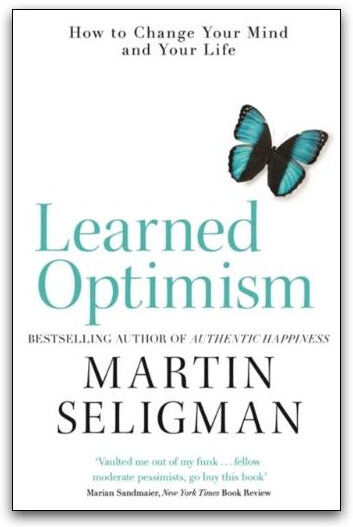
Nicholas Brealey Publishing Learned Optimism by Martin E. P. Seligman Positive Psychology, Resilience & Personal GrowthDiscover the life-changing power of positive thinking with Learned Optimism by renowned psychologist and positive psychology pioneer Martin E. P. Seligman. In this influential book, Seligman explains how optimism is not simply an inborn trait—it can be learned. Drawing on decades of psychological research, he introduces practical techniques to help readers recognize negative thought patterns, develop a more constructive outlook, and build resilience in the face of life's challenges. Whether you're looking to improve your mental wellbeing, boost confidence, manage setbacks, or achieve personal and professional success, Learned Optimism provides evidence-based strategies that can help you cultivate a healthier, more positive mindset. Why Readers Love This Book: Written by the founder of positive psychology Research-based techniques for building optimism and resilience Practical exercises to overcome negative thinking Helps improve confidence, wellbeing, and emotional strength Ideal for readers interested in psychology, self-improvement, and mental wellness A modern classic in psychology, Learned Optimism offers practical tools to help you develop a more resilient mindset and lead a happier, more fulfilling life.5,99 £*Shipping: 2,99 £Secure redirect to the provider
-
Inspired Finds Growth Mindset Poster Therapy Office Wall Art Social Worker Decor Print positive Progress Rays 19.69x29.53 InCreate a space that inspires growth, reflection, and positivity with this meaningful growth mindset poster designed for professionals who care deeply about impact. Whether you're a counselor, therapist, or educator, this piece adds purpose to your...60,99 $*Shipping: 0,00 $Secure redirect to the provider
-
Inspired Finds Growth Mindset Poster Therapy Office Wall Art Social Worker Decor Print positive Progress Rays 8.27x11.81 InCreate a space that inspires growth, reflection, and positivity with this meaningful growth mindset poster designed for professionals who care deeply about impact. Whether you're a counselor, therapist, or educator, this piece adds purpose to your...43,99 $*Shipping: 0,00 $Secure redirect to the provider
-
Inspired Finds Growth Mindset Poster Therapy Office Wall Art Social Worker Decor Print positive Progress Rays 7.87x9.84 InCreate a space that inspires growth, reflection, and positivity with this meaningful growth mindset poster designed for professionals who care deeply about impact. Whether you're a counselor, therapist, or educator, this piece adds purpose to your...40,99 $*Shipping: 0,00 $Secure redirect to the provider
-
How do I calculate this equivalence transformation?
To calculate an equivalence transformation, you need to determine the ratio between the two units being converted. For example, if you are converting between miles and kilometers, you would need to know the conversion factor of 1 mile being equal to 1.60934 kilometers. Once you have this ratio, you can multiply the value you want to convert by this factor to get the equivalent value in the other unit. Make sure to pay attention to the direction of the conversion (e.g., miles to kilometers or vice versa) and use the correct conversion factor. **
-
How do you calculate an equivalence transformation?
To calculate an equivalence transformation, you first need to determine the transformation matrix that represents the change in coordinates between two different reference frames. This can be done by identifying the linear transformation that maps the original coordinates to the new coordinates. Once you have the transformation matrix, you can use it to perform the equivalence transformation by multiplying it with the original coordinates. This will result in the new coordinates that are equivalent to the original coordinates in the new reference frame. **
-
How can I calculate this growth?
To calculate growth, you can use the formula: Growth Rate = (Ending Value - Beginning Value) / Beginning Value * 100. First, determine the beginning value of the quantity you want to measure. Then, find the ending value of the quantity at a later point in time. Subtract the beginning value from the ending value, divide by the beginning value, and multiply by 100 to get the growth rate as a percentage. **
-
How do you calculate stock growth?
Stock growth can be calculated using the formula: (Ending Stock Price - Beginning Stock Price) / Beginning Stock Price. This formula gives the percentage increase in the stock price over a certain period of time. For example, if a stock's price was $50 at the beginning of the year and $60 at the end of the year, the stock growth would be calculated as: ($60 - $50) / $50 = 0.20 or 20%. This means the stock grew by 20% over the year. **
Similar search terms for Calculate
-
Inspired Finds Growth Mindset Poster Therapy Office Wall Art Social Worker Decor Print positive Progress Rays 19.69x27.56 InCreate a space that inspires growth, reflection, and positivity with this meaningful growth mindset poster designed for professionals who care deeply about impact. Whether you're a counselor, therapist, or educator, this piece adds purpose to your...58,99 $*Shipping: 0,00 $Secure redirect to the provider
-
Inspired Finds Growth Mindset Poster Therapy Office Wall Art Social Worker Decor Print positive Progress Rays 11.81x15.75 InCreate a space that inspires growth, reflection, and positivity with this meaningful growth mindset poster designed for professionals who care deeply about impact. Whether you're a counselor, therapist, or educator, this piece adds purpose to your...45,99 $*Shipping: 0,00 $Secure redirect to the provider
-
Inspired Finds Growth Mindset Poster Therapy Office Wall Art Social Worker Decor Print positive Progress Rays 15.75x19.69 InCreate a space that inspires growth, reflection, and positivity with this meaningful growth mindset poster designed for professionals who care deeply about impact. Whether you're a counselor, therapist, or educator, this piece adds purpose to your...47,99 $*Shipping: 0,00 $Secure redirect to the provider
-
Inspired Finds Growth Mindset Poster Therapy Office Wall Art Social Worker Decor Print positive Progress Rays 11.81x16.54 InCreate a space that inspires growth, reflection, and positivity with this meaningful growth mindset poster designed for professionals who care deeply about impact. Whether you're a counselor, therapist, or educator, this piece adds purpose to your...46,99 $*Shipping: 0,00 $Secure redirect to the provider
-
How do you calculate limited growth?
Limited growth can be calculated using the formula for exponential growth, which is: A = P(1 + r/n)^(nt), where A is the amount of money accumulated after n years, including interest, P is the principal amount, r is the annual interest rate, n is the number of times that interest is compounded per year, and t is the time the money is invested for. By plugging in the values for P, r, n, and t, you can calculate the limited growth of an investment or account over a specific period of time. This formula allows you to see how an investment will grow over time, taking into account compounding interest. **
-
How do you calculate bacterial growth?
Bacterial growth can be calculated using the formula Nt = N0 x 2^(t/g), where Nt is the final number of bacteria, N0 is the initial number of bacteria, t is the time in hours, and g is the generation time in hours. This formula is based on the assumption that bacteria grow exponentially by doubling in number with each generation. By plugging in the appropriate values for N0, t, and g, one can calculate the final number of bacteria after a certain period of time. This formula is commonly used in microbiology to study bacterial growth dynamics. **
-
How do I calculate constrained growth?
Constrained growth can be calculated using the formula for exponential growth, but with the addition of a limiting factor. The formula for constrained growth is: N(t) = N0 * e^(rt) / (1 + (N0/K) * (e^(rt) - 1)), where N(t) is the population size at time t, N0 is the initial population size, r is the growth rate, K is the carrying capacity, and e is the base of the natural logarithm. This formula takes into account the limiting factor (carrying capacity) to model population growth in a constrained environment. **
-
How do I calculate population growth in exponential growth?
To calculate population growth in exponential growth, you can use the formula: Nt = N0 * (1 + r)^t, where Nt is the population size at time t, N0 is the initial population size, r is the growth rate, and t is the time period. Simply plug in the values for N0, r, and t into the formula to calculate the population size at a specific time in the future. Exponential growth assumes that the population size increases at a constant percentage rate over time. **
* All prices are inclusive of VAT and, if applicable, plus shipping costs. The offer information is based on the details provided by the respective shop and is updated through automated processes. Real-time updates do not occur, so deviations can occur in individual cases. ** Note: Parts of this content were created by AI.